Your kidneys are two fist-sized organs that quietly filter nearly 200 litres of blood every single day. They control your blood pressure, balance your body's salts and water, keep your bones healthy, and remove waste from your body. Yet kidney disease is often called a "silent killer" — because by the time most patients feel something is wrong, the kidneys may already have lost 50 to 60% of their function.
The good news? With early detection, kidney disease can almost always be slowed, controlled, or even reversed. The challenge is recognizing the early warning signs — most of which are easy to dismiss as "just feeling tired" or "just a normal change with age."
In this guide, we list the 10 most common early signs of kidney trouble that you should never ignore — especially if you are diabetic, hypertensive, over 50, or have a family history of kidney disease.
1. Persistent Fatigue and Low Energy
When kidneys are not filtering properly, waste products and toxins build up in the blood. This can make you feel tired, weak, and constantly drained — even after a full night's sleep. As kidney function declines, the body also makes less of a hormone called erythropoietin, which is needed to produce red blood cells. The result is anaemia — another major cause of unexplained fatigue.
What to watch for: Tiredness that does not improve with rest, difficulty concentrating, or feeling exhausted after light activity.
2. Foamy or Bubbly Urine
A small amount of foam in urine is normal. But if you regularly see foam that looks like beaten egg whites and takes time to settle, it could mean protein is leaking into your urine. This condition, called proteinuria, is one of the earliest signs of kidney damage — especially in people with diabetes or high blood pressure.
What to watch for: Persistent foamy urine over several days, especially in the morning.
3. Swelling in the Ankles, Feet, or Around the Eyes
When kidneys cannot remove enough sodium and water, fluid builds up in the body. This often shows up first as swelling in the ankles, feet, hands, or puffiness around the eyes. The skin may feel tight, and shoes or rings may suddenly feel snug.
What to watch for: Visible swelling that gets worse during the day or after standing for long periods.
4. Frequent Urination, Especially at Night
Healthy adults usually do not need to wake up more than once at night to urinate. If you find yourself getting up two, three, or more times every night, your kidneys may be struggling to concentrate urine — an early sign of declining function. In men, an enlarged prostate can also cause this, but it should never be assumed without proper evaluation.
What to watch for: A sudden change in your urination pattern, especially increased frequency at night.
5. Blood in the Urine
Even a small amount of blood in urine — visible or detected only on a routine urine test — is a warning sign. Blood can appear because of kidney stones, infections, or damage to the kidney's filtering units. It should always be investigated, even if it happens just once.
What to watch for: Pink, red, or cola-coloured urine, or blood reported in a urine test.
6. Persistent Itching Without a Skin Rash
When kidneys cannot remove waste effectively, those waste products build up in the blood and irritate the skin. The result is a deep, persistent itch that creams and moisturizers cannot fully relieve. This is more common in advanced kidney disease but can begin earlier.
What to watch for: Constant itching, especially over the back, arms, or legs, with no visible rash.
7. Loss of Appetite and a Metallic Taste in the Mouth
The buildup of toxins, called uraemia, can dull the sense of taste and cause a metallic or ammonia-like taste, making food unappealing. Patients often lose appetite, eat less, and lose weight without trying. This is a sign that kidney function may already be significantly reduced.
What to watch for: Loss of interest in food, especially meat, combined with unintentional weight loss.
8. Trouble Sleeping or Restless Sleep
People with kidney disease often experience disturbed sleep due to a buildup of toxins, restless legs, or breathing problems such as sleep apnoea — all of which are more common when kidneys are not working well. If you sleep poorly despite feeling exhausted, it is worth getting your kidney function checked.
What to watch for: New onset of insomnia, restless legs at night, or waking up tired despite enough hours in bed.
9. High Blood Pressure That Is Hard to Control
High blood pressure is both a cause and a result of kidney disease. If your blood pressure is rising despite medication, or if you are needing more medicines to keep it controlled, the kidneys may be losing function. This is one of the most common patterns we see in Indian patients with undiagnosed kidney disease.
What to watch for: A trend of rising blood pressure readings, or BP that no longer responds well to your usual medicines.
10. Muscle Cramps and Twitches
When kidneys are unable to balance the levels of calcium, phosphorus, and electrolytes in the blood, muscle cramps — especially in the legs at night — become common. Some patients also experience muscle twitches or a feeling of "heaviness" in the limbs.
What to watch for: Frequent leg cramps, especially at night, without obvious causes like dehydration or strenuous exercise.
So... When Should You See a Nephrologist?
You should consider an evaluation if you have any combination of the symptoms above, or if you fall into one of these high-risk groups:
- Diabetics — kidney disease affects nearly 30 to 40% of long-standing diabetics
- People with high blood pressure — one of the top causes of kidney damage in India
- People over 60 — kidney function naturally declines with age
- Family history of kidney disease or polycystic kidney disease
- Anyone with recurrent kidney stones or urinary infections
What Tests Will You Need?
Most kidney problems can be screened with two simple, inexpensive tests:
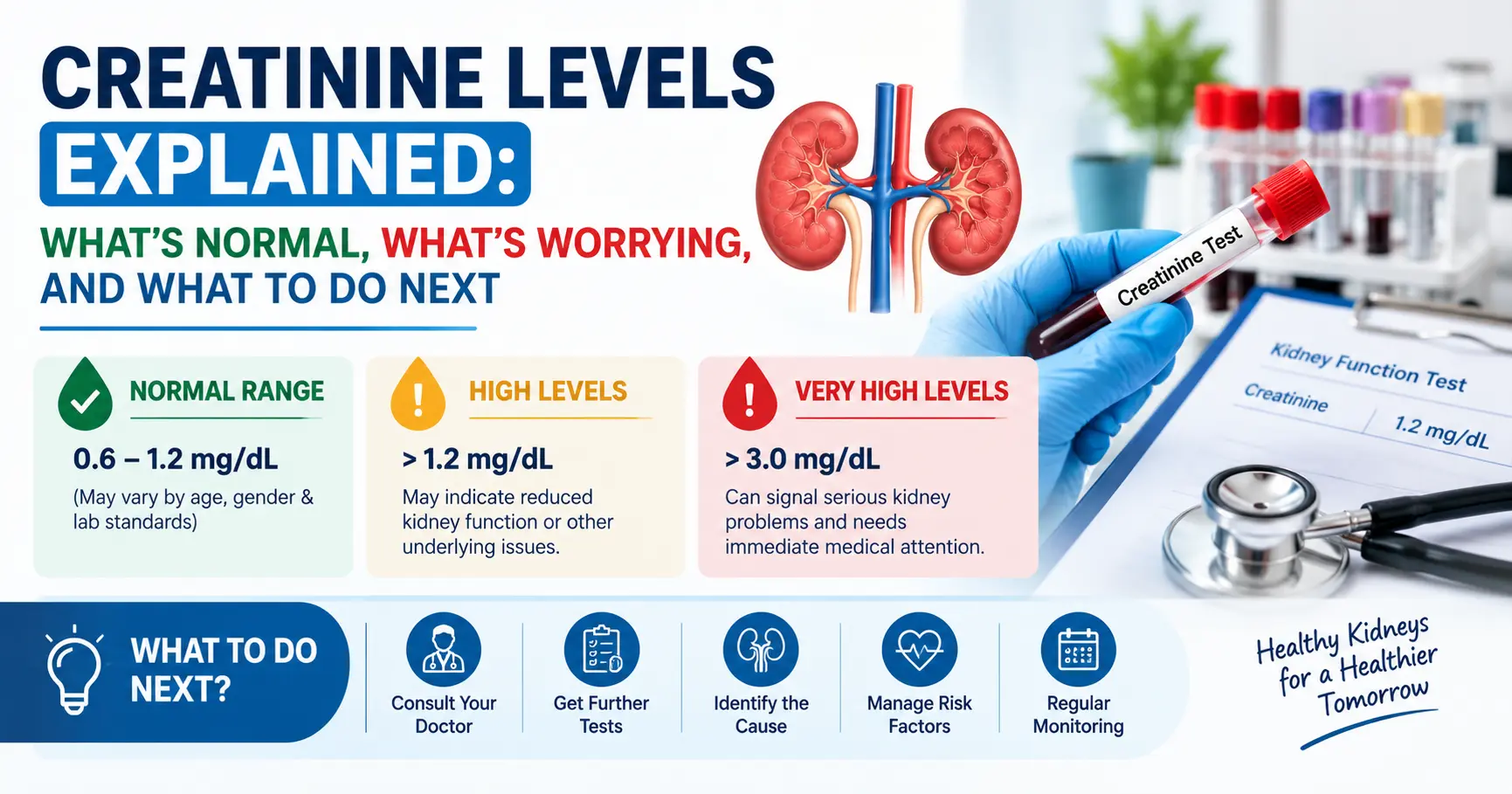
- Serum creatinine and eGFR — a blood test that shows how well your kidneys are filtering
- Urine routine and urine albumin-to-creatinine ratio — to check for protein or blood in urine
If anything looks unusual, your nephrologist may add a kidney ultrasound and other targeted tests. Together, these give a clear picture of your kidney health — often within a single visit.
Final Thoughts
Kidney disease rarely makes itself known until significant damage has already occurred. But the body usually gives quiet warnings long before things get serious — fatigue, foamy urine, ankle swelling, sleep disturbance. Listening to those signals, especially if you are in a high-risk group, can save your kidneys and your life.
If you have noticed any of the signs above, or if it has been more than a year since your last kidney check-up, book a consultation with our nephrology team. A simple visit and a routine blood and urine test are all it usually takes to know where you stand.
This article is for general awareness only and does not replace professional medical advice. If you have any symptoms or concerns, please consult a qualified nephrologist.
Concerned about your kidney health?
Book a consultation with our nephrology team. A simple visit and routine tests are all it takes to know where you stand.
Book a consultation →